


































Healthcare Solutions
Healthcare organizations trust us to build software that handles complexity without creating it. As a custom healthcare software development company, TOPS builds digital solutions that improve clinical accuracy. Whether you are modernizing legacy systems or building a net-new platform, we bring the domain knowledge and AI capability to do it right.
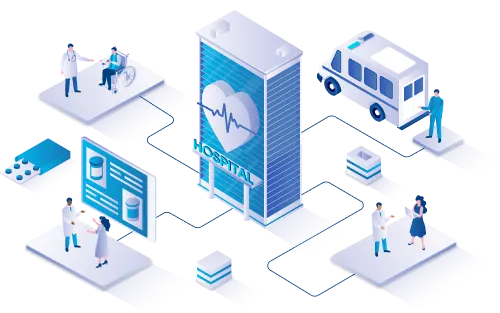
AI-Powered Healthcare Software for Smarter Clinical and Operational Outcomes
We build solutions powered by agentic AI, large language models, and retrieval-augmented generation (RAG) that help clinical and operational teams move faster with fewer errors. From automating clinical coding workflows to handling prior authorization submissions end-to-end, we have applied these capabilities in real healthcare environments, and we understand the compliance requirements that come with it.
Types of Healthcare Software We Develop

Clinical Coding Software

Patient Management System

Revenue Cycle Management Software

Prior Authorization Automation

EHR and System Integration Platform
Healthcare Analytics Dashboard
Our Healthcare Software Development Services
Tech Consultation
Every engagement starts with a structured discovery process. Clinical and operational workflows are mapped in detail, manual bottlenecks and compliance exposure are identified, and the areas where AI and automation can create the most immediate, sustainable impact for your environment are scoped before any build decisions are made.
AI and Automation
AI capabilities built for healthcare go beyond generic automation. NLP-driven clinical coding tools, agentic prior authorization workflows, intelligent document processing for clinical records, and LLM-assisted automation for revenue cycle and care coordination operations are designed around the accuracy and compliance standards your environment requires.
Custom Software Development
No two care environments are the same. Solutions are built specifically for your care model, whether that is a hospital system, a multi-specialty clinic, a digital health startup, or a health technology company building platforms for provider networks across multiple markets.
EHR and System Integration
We connect new software to existing infrastructure without introducing data gaps, which requires precision. Using HL7, FHIR, and payer API frameworks, integrations are built to ensure real-time, accurate data flow between clinical documentation systems, billing platforms, and third-party tools from day one.
Healthcare Data Migration
Data migrations in live clinical environments carry real risk. A structured, HIPAA-compliant migration methodology is used to preserve clinical record integrity, minimize system downtime, and ensure your teams have full, accurate data access from the moment they transition to the new platform.
Compliance and Security
HIPAA, HITECH, and SOC 2-aligned security is designed into the solution architecture from the start, not retrofitted after development. Role-based access control, end-to-end encryption, comprehensive audit logging, and data residency controls are built into the platform structure appropriate to the sensitivity of the clinical data being handled.
Looking for Customized Healthcare Solutions?
Build HIPAA-compliant, AI-ready healthcare software designed around your clinical and operational workflows.
Our Healthcare Software Development Process

Discovery and Clinical Workflow Mapping

Solution Architecture and Compliance Planning

UI/UX Design for Clinical Environments

Agile Development and Clinical QA

EHR Integration and Data Validation

Deployment and Ongoing Support
Why Choose TOPS for Healthcare Software Development

Technology Stack for Healthcare Software Solutions


Frequently Asked Questions
Is your question not here? No Problem, We're waiting for you with more answers! Do not hesitate to contact us if your inquiry was not included in the list.
We develop clinical coding platforms, prior authorization automation tools, patient management systems, revenue cycle management software, EHR and payer integration platforms, and healthcare analytics dashboards. Every solution is built specifically for the workflows, user roles, and compliance requirements of the client’s care environment rather than adapted from a generic template.
HIPAA compliance is designed into the solution architecture from the start. This includes defining data classification and handling requirements during discovery, designing role-based access control and audit logging into the core data model, implementing end-to-end encryption, and validating compliance controls as part of QA before any production deployment.
Yes. We build integrations using HL7 and FHIR standards that connect your custom platform to existing EHR systems, payer portals, and third-party clinical tools. Every integration goes through data accuracy validation and reliability testing before going live to ensure clinical record integrity is maintained across connected systems.
AI-assisted coding tools process physician notes, encounter records, and discharge summaries using natural language processing to generate accurate code suggestions. Coders review and confirm suggestions rather than building codes from raw documentation, which reduces review time per encounter, improves consistency across coders, and lowers denial rates linked to coding inaccuracies.
Prior authorization automation uses agentic AI to manage the full PA lifecycle without manual effort at each step. The system prepares authorization requests from clinical documentation, submits them to payer portals, monitors approval status in real time, escalates exceptions for human review, and tracks resolution, significantly reducing the time clinical and administrative staff spend managing PA queues.
Timeline depends on scope, the number of integrated systems, user role complexity, and AI capability requirements. A focused solution with core functionality and standard integrations typically takes a few months from discovery to go-live. Larger platforms with multi-system EHR integration and AI automation layers require more time, which we scope precisely during the discovery and architecture phase.
Yes. We provide structured post-launch support covering performance monitoring, issue resolution, compliance updates triggered by regulatory changes, and feature enhancements aligned to your evolving clinical and operational needs. Our support model is designed to be a long-term engagement, not a handoff after launch.
Latest Insights in AI
View all Blogs
TOPS Infosolutions Is Certified in the Claude Partner Network

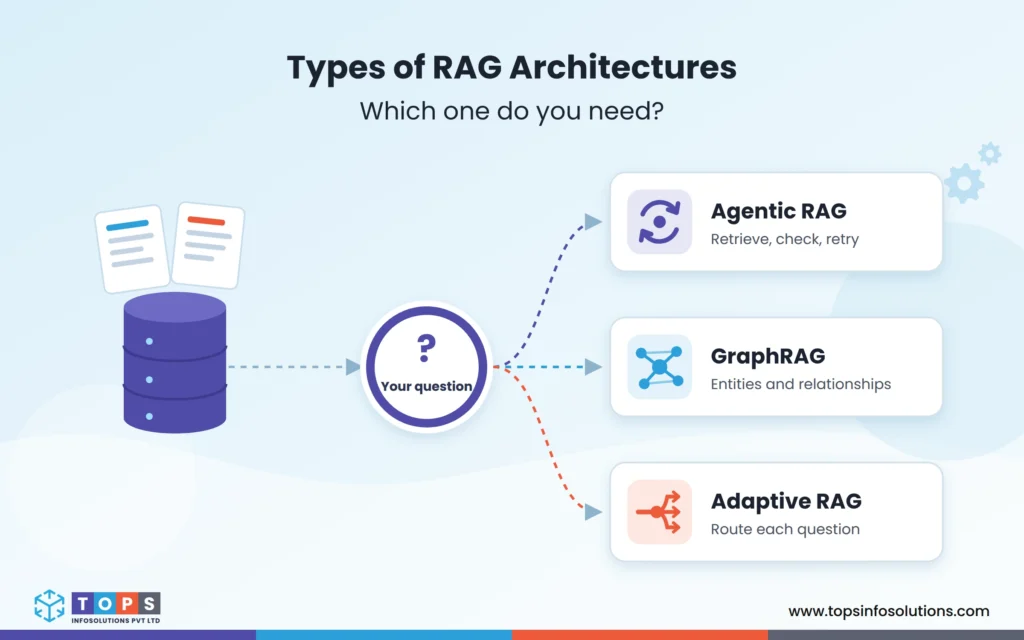
Beyond Basic RAG: Agentic RAG, GraphRAG, and What Actually Improves Answer Quality
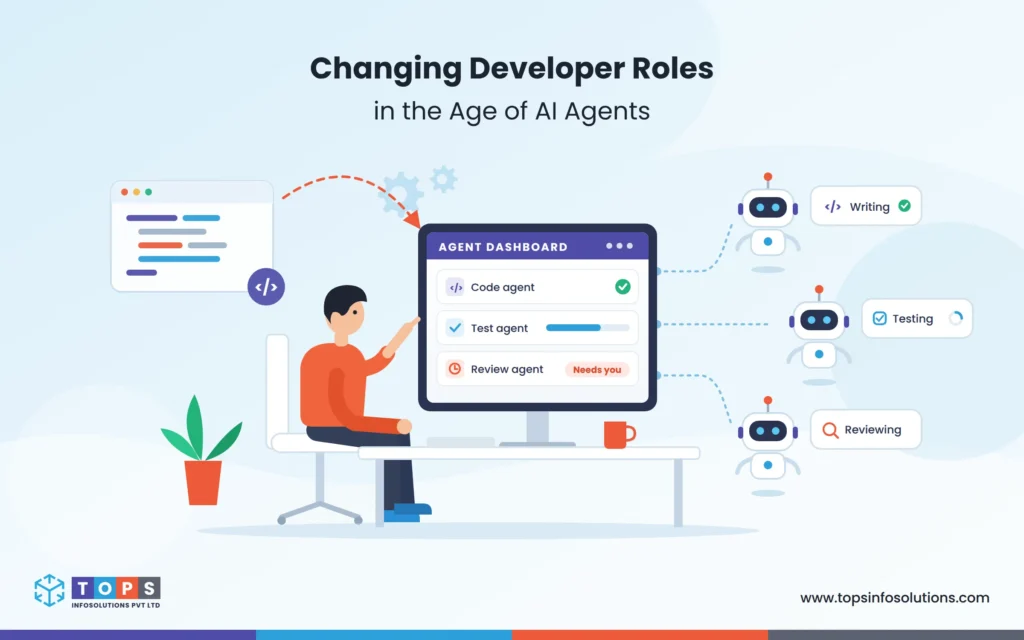
From Writing Code to Supervising Agents: How the Developer’s Job Is Changing in 2027
Get in Touch
Our Offices

Follow us on


Subscribe Us
Get TOPS Infosolutions' latest articles straight to your inbox.


Copyright © 2026 TOPS Infosolutions Pvt Ltd. All Rights Reserved